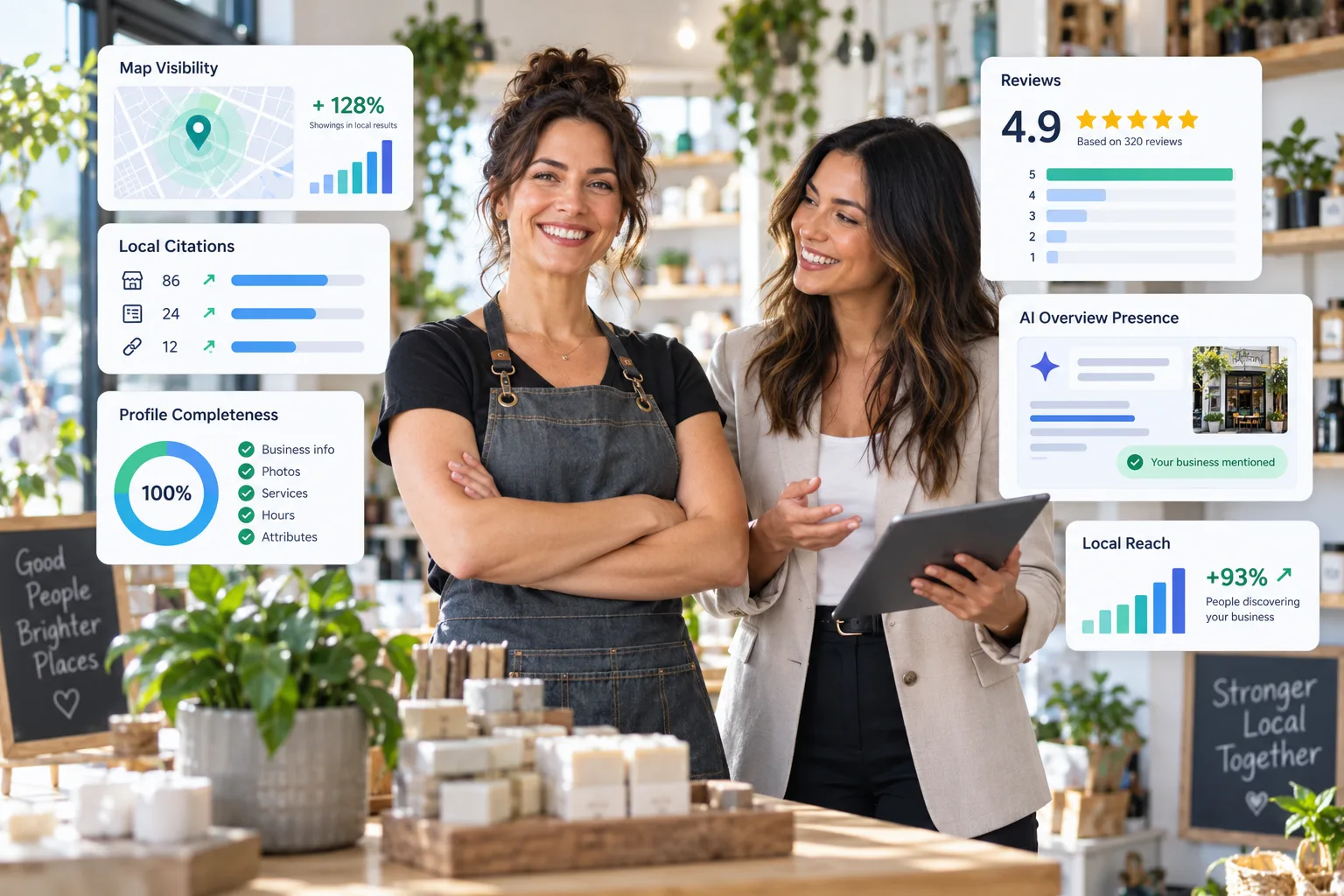
Location evidence in one view
Profile accuracy, map coverage, reviews, and location pages are reviewed together.
EXAMPLE BUYER PROMPT“Which independent optician near Manchester city centre offers children’s eye tests?”
- Google search84
- AI answers68
- Authority73
- Social61
Example VisibleGen workspace using demonstration data. It does not represent a customer account or a published study result.
The short answer
Local businesses improve their chance of being mentioned in Google AI Overviews by maintaining accurate business information, earning relevant reviews and local references, publishing genuinely useful location-specific pages, and making services, expertise, and service areas unambiguous. No individual tactic guarantees inclusion.
Start with the local entity
Use one primary business name, address, phone number, website, and category. Keep them aligned across the website, Google Business Profile, major directories, industry profiles, and social accounts. Add opening hours, service areas, accessibility details, and appointment information where relevant.
Build pages for local decisions
A location page should do more than repeat a city name. Explain what is available, who provides it, which areas are served, what customers should expect, and how the location differs from other branches.
- Describe services in plain language.
- Show original photographs of the location and team.
- Answer parking, access, booking, delivery, and timing questions.
- Include testimonials or case evidence tied to the location when permitted.
- Link to relevant service, review, and contact pages.
Use reviews as customer evidence
Encourage genuine reviews after real customer interactions. Do not script identical language or offer prohibited incentives. Respond helpfully, and look for recurring phrases customers use to describe outcomes, specialties, and service quality.
Names, categories, locations, hours, and services agree.
Pages answer questions specific to the place and service.
Reviews, local press, associations, and directories support the story.
Earn local and industry references
Useful sources include chambers of commerce, professional bodies, community organizations, event partners, local media, suppliers, and specialist publications. Pursue relationships that make sense for the business rather than collecting low-quality directory links.
Make the site easy to understand
Use crawlable HTML, descriptive headings, fast images, clear internal links, canonical URLs, and accurate Organization or LocalBusiness structured data where applicable. Structured data should reflect visible facts; it should not contain invented ratings, services, or locations.
Measure the whole local journey
Track map visibility, profile actions, reviews, local landing-page performance, AI mentions, and cited sources together. A change in an AI answer is more useful when you can connect it to the local evidence that changed.
VisibleGen’s Local Visibility suite brings map, profile, review, and local competitor signals into the same action plan.